Martial Arts in Cranbourne: Which Style Actually Suits Your Child?
Cranbourne has no shortage. Inside a ten minute radius you can find karate taught in three or four lineages, plus taekwondo, Brazilian jiu jitsu, boxing, kickboxing, aikido and Krav Maga.
That is the problem. Not a lack of choice. Too much of it, described in words that mean nothing to someone who has never trained.
So here is a plain guide to what each style actually involves, who it suits, and who it does not. We teach karate in Cranbourne, so we have an obvious bias. We have tried to write this so you could use it to choose somewhere else.
The first split: striking or grappling
Every martial art sits somewhere on one line. Does it train you to hit from a distance, or to control someone up close?
Striking arts include karate, taekwondo, boxing and kickboxing. You stay on your feet. You learn to punch, kick, block and move.
Grappling arts include Brazilian jiu jitsu, judo and wrestling. You end up on the mat. You learn to control, hold and escape.
Aikido and Krav Maga sit off to the side. Aikido redirects force and uses very little striking. Krav Maga is a self defence system, not a traditional art. It is built around practical escapes. Most schools teach it to teenagers and adults rather than young children.
This one distinction narrows the field more than anything else. A child who hates being held down will not last in a grappling art. A child who is uncomfortable being hit, even lightly, will struggle in a striking art that spars early.
What each style is actually like
Plain descriptions, without the marketing.
Karate
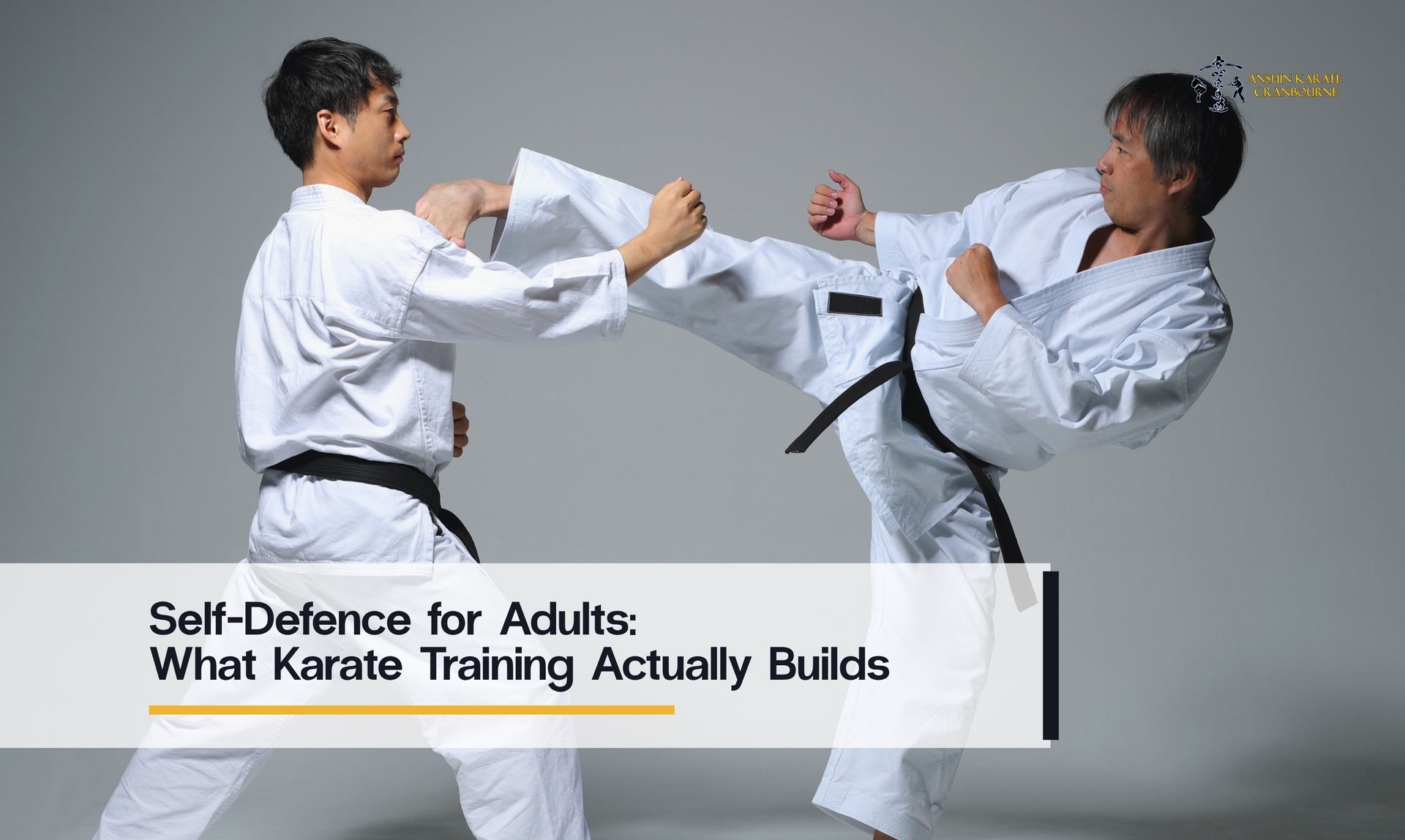
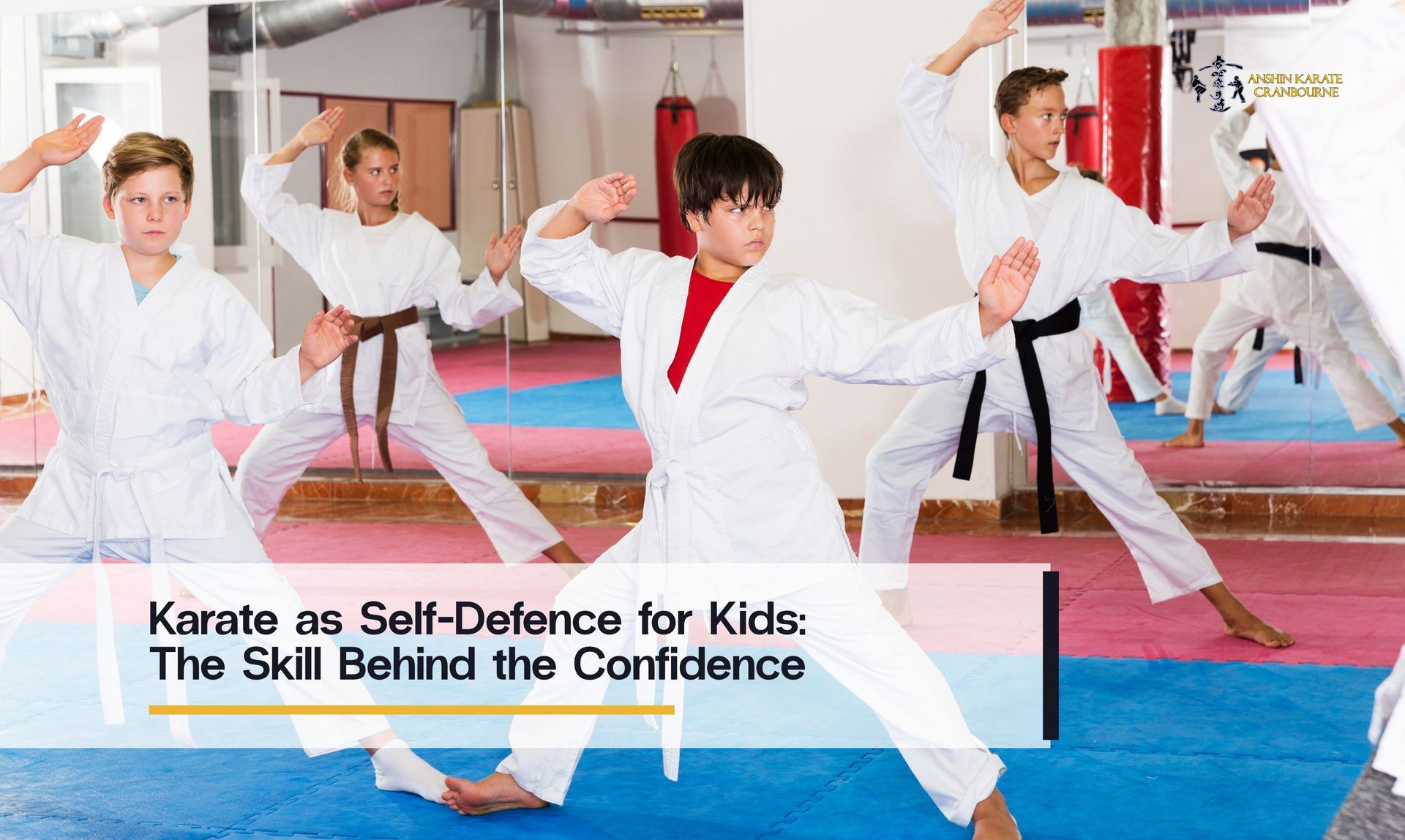
Striking with both hands and feet, heavy emphasis on stance, balance and control. Classes are structured and repetitive, with set sequences called kata. Belts mark progress.
Suits a child who likes knowing what comes next, or who needs practice at waiting and following instructions. Less suited to a child who wants constant movement and variety.
Several karate styles are taught in the area. Shotokan, Goju Ryu and Shorin Ryu all appear locally. They differ in stance depth and kata, not in anything a beginner would notice.
Taekwondo
Kicking is the centre of it, including spinning and jumping techniques. It looks dynamic, and children usually find it exciting early on.
Suits a flexible, energetic child who likes the acrobatic side. It also has an Olympic pathway, which karate does not currently. Less suited to a child who finds high kicking frustrating or who is heavier set.
We go into this one properly in our comparison of karate and taekwondo for kids .
Brazilian jiu jitsu
Ground based grappling, with no striking at all. Students learn to control position, apply holds and escape bad spots. There is close physical contact from the very first session.
Suits a child who likes problem solving, and a smaller child who will benefit from learning leverage against size. It is often suggested for bullying, because holding someone still does not mean hurting them.
Less suited to a child who dislikes being touched or confined. That reaction is worth testing before enrolling, not after.
Boxing and kickboxing
Fitness heavy and repetitive. Very good for footwork and timing. Junior classes are usually light contact or none at all. The culture sits closer to sport than to traditional martial arts.
Suits an older child or teenager who wants fitness and does not care about belts or ceremony. Less suited to a young child who needs structure and ritual to stay engaged.
Aikido
Redirecting an attacker's momentum rather than meeting it. Very little striking. Emphasis on blending, balance and joint control, with a strong focus on etiquette.
Suits a calm, patient child who dislikes aggression of any kind. Less suited to a child who wants to feel powerful quickly, because progress is slow and abstract early on.
Krav Maga
A modern self defence system rather than a traditional art. No kata, no belts in most schools, no competition. Trains practical escapes and responses under stress.
Suits a teenager or adult with a specific safety concern. Most programs do not take young children, and that is appropriate.
Matching the style to the child
Use what you already see at home. It is a better guide than any description above.
| What you see at home | Worth looking at | Be cautious with |
|---|---|---|
| Cannot sit still, no off switch | Taekwondo, kickboxing | Aikido, which needs patience early |
| Shy, hates being watched | Karate, in a small class | Anything with early sparring or demonstrations |
| Small for their age, gets pushed around | Brazilian jiu jitsu, karate | Styles that reward size and reach |
| Hates being touched or held | Karate, taekwondo | Jiu jitsu and wrestling |
| Uncomfortable being hit, even lightly | Jiu jitsu, aikido | Boxing, kickboxing |
| Loves puzzles and problem solving | Brazilian jiu jitsu | Nothing in particular |
| Wants to compete seriously one day | Taekwondo, jiu jitsu, boxing | Arts with thin competition structures |
| Needs routine and predictability | Karate, aikido | Open mat formats with loose structure |
Note how often karate appears next to shy, routine and predictable. That is genuinely what it is good at, and it is equally why an energetic child chasing constant variety may find it slow.
The uncomfortable truth:
A good school in the wrong style beats a poor school in the right one, almost every time. Style is the tiebreaker. The room, the instructor and the class size decide the outcome.
What matters more than the style
We have written this at length elsewhere, but the short version belongs here too.
- Class size. Under fifteen students per instructor is workable. Under ten is where a quiet child gets corrected by name rather than drifting at the back.
- What they teach before any physical response. Noticing early, using your voice and telling an adult resolve more situations than technique does. We set out the full order in our guide to kids self defence and bullying.
- The twelve month cost, in writing. Term fees, uniform, grading fees at each belt, yearly club fees. Grading fees recur and catch people out.
- Who actually teaches. Not the head instructor. The person on the floor every week. Ask whether they hold a current Working with Children Check, which Victorian law requires for child related work.
- Does the timetable survive a bad week? A club running the same group on more than one day turns a missed session into a rescheduled one.
- How and when contact starts. This varies enormously between clubs of the same style, and it is the question parents most often forget to ask.
Our full guide to choosing a kids martial arts school in Cranbourne works through each of these in detail.
What the first term costs you, beyond money
One thing rarely mentioned when comparing styles is what the commitment actually takes from a household.
Two sessions a week is the usual starting point. For most families that means two weeknight runs, or one weeknight and a Saturday morning. Add travel and it is roughly four hours a week, gone from an already full schedule.
That is worth naming before you start, because the families who last are the ones who planned for it. The ones who stop are usually the ones who signed up imagining one easy hour.
There is a second cost that surprises people. For the first month or two, a child will not look like they are learning much. They will come home and show you the same block they showed you last week. Progress in any martial art is slow and invisible at the start, then arrives in sudden jumps.
Parents who expect that stay calm through it. Parents who do not often pull a child out right before the point where it clicks, usually somewhere around the second month.
How to actually test a shortlist
Pick two or three clubs. Then do the same four things at each, so you are comparing like with like.
Watch a normal class, not a trial
A trial is a performance. Ask to sit in on a regular session for your child's age group. Watch the back of the room. The least confident student tells you more than the best one.
Take your child to watch before they participate
Twenty minutes at the side of the room removes most of the unknown. Their reaction to the noise, the contact and the bowing will tell you whether the style fits better than any conversation will.
Drive the route at the real hour
Not Sunday afternoon. A weekday at the time you would actually be going. Distance is one of the strongest predictors of whether a family keeps attending past week six.
Ask the same three questions everywhere
What does a full year cost? Who teaches this class every week? What do you teach a child to do when someone shoves them in the playground? The last one sorts schools faster than anything else, because a school that opens with a technique rather than walking away has told you where its priorities sit.
Where karate at Anshin fits
Anshin Karate is a family run club at 13A Arundel Street, Cranbourne. We teach traditional karate with a practical self defence focus. De-escalation and control come before technique.
Anshin means peace of mind. The club was founded on the belief that practical self defence gives young people purpose, confidence and discipline.
Junior and intermediate classes are for ages 5 to 12 and run Monday and Thursday evenings plus Saturday mornings. Senior classes are for 13 and above, including adult beginners.
Students are grouped by belt as well as age, so a beginner is not lined up behind students two years ahead. If you are considering this for yourself, we have written about what the first month feels like as an adult .
The honest limits.
We are one club, one venue, one focused timetable. We do not run a competition circuit and we do not teach grappling. We are not the right choice for a child chasing an Olympic pathway, or a family needing four training nights a week. Another club in the area will serve you better for that.
What we offer instead is continuity. The person teaching your child in week one is still teaching them in year two.
Frequently Asked Questions
Which martial art is best for a shy child?
Class size matters more than style here, but traditional arts like karate and aikido tend to suit shy children well. Both are structured and predictable, both involve a set routine each session, and neither requires a child to improvise in front of others early on. What to avoid is any club where beginners are put in front of the group to demonstrate, or where sparring starts in the first few weeks. Ask to watch a normal class and see how the quietest student in the room is treated.
Which martial art is best for self defence?
This depends far more on the school than the art. Most styles contain techniques that work, and most can be taught as a sport with the practical side stripped out. Brazilian jiu jitsu is often recommended because control does not require striking, which matters in a school setting where hitting back creates its own problems. But the most useful skills are not physical at all. Noticing early, using your voice, and walking away to tell an adult resolve far more situations than technique ever does.
What is the best martial art for a 5 year old?
At five, the instructor and class size matter far more than the style. Most children that age do best in something structured and repetitive with clear progression, which usually means karate or taekwondo. Grappling arts can work but involve close physical contact from day one, which suits some five year olds and not others. The practical test is to take your child to watch a class of each and see which room they respond to.
Are there martial arts classes in Cranbourne for adults?
Yes, and more than most people realise. Karate, taekwondo, Brazilian jiu jitsu, boxing, kickboxing, aikido and Krav Maga are all taught locally with adult classes. Our own senior classes are for students aged 13 and above, which includes adult beginners, and run Monday and Thursday evenings. You do not need to be fit before starting. Waiting until you are fitter is the most common reason adults never begin.
Should my child try more than one martial art first?
Watching a class at two or three clubs is sensible and costs nothing. Enrolling in more than one at a time is usually not, because progress in any art comes from repetition, and splitting attention slows both. A better approach is to visit a few, pick one, and commit for a full term. If it is clearly wrong after that, switching is easy and nothing is wasted. The fitness, coordination and class discipline all carry across.
How do I know if a club is any good?
Watch a normal class rather than a trial, and look at the back row rather than the front. Ask for a written twelve month cost including grading fees. Ask who teaches the class every week and whether they hold a current Working with Children Check. And ask what they teach a child to do before any physical response. A club that answers all four plainly, without pressure to sign that day, is usually a club worth joining.
Visit three, then decide
The style matters less than the industry wants you to believe. What decides the outcome is whether your child feels like they belong in that room, and whether the commitment survives a normal week in a busy household.
So narrow it with the table above, shortlist two or three, and run the same four tests at each. Watch a normal class. Bring your child to observe. Drive the route at the real hour. Ask the same three questions everywhere.
Then pick the one where the answers came plainly and the newest student in the room looked well looked after.
If karate is on your shortlist, you are welcome to come and watch a session in Cranbourne before deciding anything.
Enrol Now
Book a free trial class at Anshin Karate Cranbourne
Anshin. Peace of mind.
Sources Referenced
- Martial arts styles taught in the Cranbourne area confirmed by local business listings, September 2026: karate (several lineages), taekwondo, Brazilian jiu jitsu, boxing, kickboxing, aikido and Krav Maga.
- International Olympic Committee: taekwondo has been an Olympic medal sport since Sydney 2000 and is on the Los Angeles 2028 programme. Karate appeared at Tokyo 2020 only.
- Victorian Government: Working with Children Check requirements for child related work. workingwithchildren.vic.gov.au
- Anshin Karate class ages, structure, location and teaching emphasis verified against anshinkarate.com.au and the client supplied timetable, September 2026.